


The Indian Patent Office plays a crucial role in promoting innovation and protecting intellectual property rights across India. As the authority responsible for granting and managing patents, it ensures that inventors receive legal protection for their inventions. A patent grants exclusive rights to an inventor, preventing others from making, using, selling, or distributing the invention without authorization for a specified period.
The growth of technology, research, and entrepreneurship has increased the importance of intellectual property protection. Businesses, startups, scientists, and independent inventors rely on the Indian Patent Office to secure their innovations and maintain a competitive advantage in the market. The office operates under the provisions of the Patents Act, 1970, and its subsequent amendments.
The patent system encourages creativity by rewarding inventors for their efforts while also contributing to public knowledge. Once a patent application is published, the technical details become available to the public, helping further innovation. Understanding the role and functions of the Indian Patent Office is essential for anyone seeking legal protection for a new invention in India.
History and Evolution of the Indian Patent Office
The patent system in India has evolved significantly over the years. Before independence, patent laws were largely influenced by British legislation. The Indian Patents and Designs Act of 1911 governed intellectual property protection during that period. After independence, policymakers recognized the need for a patent framework that suited India’s economic and industrial goals.

The Patents Act, 1970, became a landmark legislation that redefined the patent system in the country. Over time, several amendments were introduced to align Indian laws with international agreements and technological developments. These changes strengthened patent protection while balancing public interests.
Today, the Indian Patent Office functions as a modern institution equipped with digital filing systems, online databases, and advanced examination procedures. The office has played a significant role in supporting innovation-driven industries such as pharmaceuticals, biotechnology, information technology, and engineering. Through efficient administration and transparent procedures, it continues to strengthen India’s intellectual property ecosystem and support inventors seeking patent protection.
Functions of the Indian Patent Office
The Indian Patent Office performs several important functions related to intellectual property administration and innovation protection.
Major Functions
- Receiving and processing patent applications.
- Examining inventions for patentability.
- Publishing patent applications.
- Granting or rejecting patent requests.
- Maintaining patent records and databases.
- Handling patent opposition proceedings.
- Facilitating public access to patent information.
- Promoting awareness of intellectual property rights.
These functions ensure that every patent application undergoes proper scrutiny before exclusive rights are granted. The office also supports transparency by making patent-related information accessible to the public.
Organizational Structure of the Indian Patent Office
The Indian Patent Office operates under the Controller General of Patents, Designs, and Trade Marks. It has multiple branches across India to handle patent applications and examinations efficiently.
Major Patent Office Locations
| Office Location | Primary Role |
|---|---|
| Kolkata | Headquarters |
| Delhi | Patent Examination |
| Mumbai | Patent Administration |
| Chennai | Patent Processing |
Each office contributes to managing patent applications, conducting examinations, and maintaining records. The decentralized structure helps improve efficiency and reduce processing delays.
What Is a Patent and Why Is It Important?
A patent is a legal right granted to an inventor for a new and useful invention. It provides exclusive rights over the invention for a limited period, generally twenty years from the filing date. During this period, others cannot commercially exploit the invention without permission.
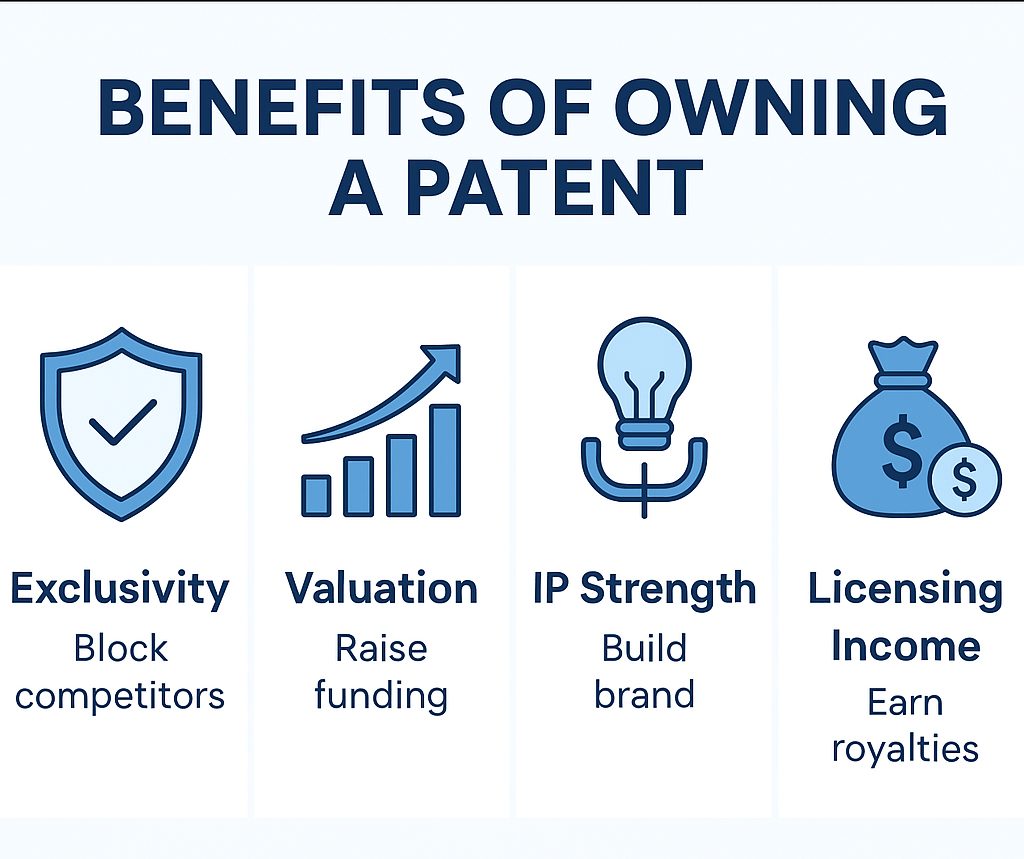
The importance of a patent extends beyond legal protection. It encourages investment in research and development by ensuring that inventors can benefit from their innovations. Businesses often use patent portfolios to strengthen their market position and attract investors.
Furthermore, a patent promotes technological advancement by requiring inventors to disclose details of their inventions. This disclosure contributes to public knowledge and inspires future innovations. For startups and enterprises, obtaining a patent can significantly enhance credibility and commercial opportunities.
Types of Patent Applications in India
The Indian Patent Office accepts different types of patent applications depending on the nature and stage of the invention.
Common Types of Applications
- Ordinary Application
- Provisional Application
- Complete Specification Application
- Convention Application
- PCT National Phase Application
- Divisional Application
- Patent of Addition
Each application type serves a specific purpose and allows inventors to secure protection according to their business and innovation requirements. Selecting the correct application category is essential for obtaining a successful patent grant.
Patentability Criteria in India
Not every invention qualifies for patent protection. The Indian Patent Office evaluates applications based on specific legal requirements.
Essential Patentability Requirements
- Novelty
- Inventive Step
- Industrial Applicability
- Non-Obviousness
- Compliance with Legal Provisions
Novelty means the invention must be new and not previously disclosed anywhere in the world. The inventive step requirement ensures that the invention is not obvious to a person skilled in the relevant field. Industrial applicability means the invention must be capable of practical use.
Meeting these criteria significantly increases the likelihood of obtaining a patent grant from the authorities.
Patent Filing Process in India
The process of obtaining a patent involves several stages. Applicants must carefully follow each step to ensure compliance with legal requirements.
Patent Filing Stages
| Stage | Description |
|---|---|
| Invention Disclosure | Preparation of invention details |
| Patent Search | Examination of prior art |
| Drafting | Preparation of specification |
| Filing | Submission of application |
| Publication | Official publication |
| Examination | Technical review |
| Objection Response | Clarification and amendments |
| Grant | Approval of patent rights |
A properly prepared patent application can reduce delays and improve the chances of approval.
Examination and Grant Procedure
After publication, applicants must request examination within the prescribed period. Patent examiners review the application and determine whether it satisfies legal requirements. They assess novelty, inventive step, industrial applicability, and compliance with statutory provisions.
If objections arise, the examiner issues a First Examination Report. Applicants are required to respond with explanations, amendments, or supporting evidence. Once all concerns are resolved, the application proceeds toward grant.
The Indian Patent Office ensures that every patent application undergoes rigorous scrutiny. This process protects the integrity of the patent system and prevents the grant of invalid patents. Upon successful completion of examination requirements, the patent is officially granted and recorded in the patent register.
Benefits of Obtaining a Patent
Securing a patent offers numerous advantages to inventors and businesses.
Key Benefits
- Exclusive commercial rights.
- Legal protection against infringement.
- Enhanced business valuation.
- Increased investor confidence.
- Licensing opportunities.
- Competitive market advantage.
- Revenue generation potential.
- Recognition of innovation.
A strong patent portfolio can significantly contribute to long-term business growth and profitability.
Challenges in Patent Registration
Although the patent system offers substantial benefits, applicants may face several challenges during the registration process. Preparing a technically accurate application requires expertise and attention to detail. Incomplete disclosures, drafting errors, and insufficient supporting data can result in objections or rejection.
Conducting prior art searches is another important challenge. Existing inventions and published documents may affect the novelty of an invention. Applicants must carefully assess available information before filing.
Complex legal requirements and examination procedures may also create difficulties for first-time inventors. Proper planning and professional guidance can help overcome these challenges and improve the chances of obtaining a patent successfully.
Role of Professionals in Patent Filing
Many inventors seek professional assistance when filing a patent application. Intellectual property experts help prepare technical specifications, conduct searches, and respond to examination reports. Their expertise can improve application quality and reduce procedural errors.
Professional advisors also provide strategic guidance regarding filing options, international protection, licensing opportunities, and enforcement strategies. Since patent law involves both technical and legal considerations, expert support can be highly valuable.
Businesses with extensive research activities often rely on specialized teams to manage their patent portfolios. Effective management helps maximize intellectual property value while ensuring compliance with regulatory requirements.
Future of Patent Protection in India
India’s innovation ecosystem continues to grow rapidly due to advancements in technology, research, manufacturing, and entrepreneurship. As innovation expands, the role of the Indian Patent Office becomes increasingly important. Digital transformation and modernization initiatives have improved accessibility, transparency, and efficiency in patent administration.
Emerging fields such as artificial intelligence, renewable energy, biotechnology, and advanced manufacturing are expected to generate significant patent activity in the coming years. Policymakers continue to strengthen intellectual property frameworks to support economic growth and technological advancement.
The future of patent protection in India appears promising, with increased awareness among inventors and businesses regarding the importance of intellectual property rights. Continued improvements in examination processes and administrative systems are likely to further enhance the effectiveness of the patent ecosystem.
Conclusion
The Indian Patent Office serves as the foundation of intellectual property protection in India. It plays a vital role in encouraging innovation, supporting economic development, and safeguarding inventors’ rights. Through structured examination procedures, transparent administration, and legal oversight, the office ensures that deserving inventions receive patent protection.
Read more: Attorney General of India: Powers, Functions and Constitutional Role